Multimedia Design - History and Context

Friday, August 25, 2006

Simon Morely - the writing on the wall

Have newer imaging tools like digital cameras, PDAs and computer technologies changed the way we experience the visual world? If so, how?

digital cameras
my mum and brother with digital cameras - taken on another digital camera.

Computer technologies have made digital image manipulation so much easier and made our experience of the authenticity of a photograph less. They have also enabled greater imagination of different images that would have been impossible in the past. Computer generated special effects, for example, change the way we experience special effects in movies, and make anything possible, even things that would be impossible to create in any other way. It tends to make people less impressed by image manipulation and creation, and special effects need to be constantly bigger and better. In some ways these technologies have paradoxically made us appreciate impressive special effects less.

Digital cameras and imaging devices mean that people have easy access to digital images quickly, and have changed the way people view the world and images. When a digital image doesn’t have costs like film photography, people take more images, often more indiscriminately. Although it seems like you are able to document your visual world, it often means that you create less actual memorable images. Another aspect is that sometimes it feels like people become obsessed with recording ‘memoires’ as photographs rather than actually experiencing the moment.

Sunday, August 20, 2006

Daniel Chandler – Imagining futures, dramatising fears.

Science fiction is fuelled by fear. Science fiction works often depict dystopias – extremely dysfunctional societies – caused by technological malfunction. What do we fear in these scenarios?

metropolis
Fritz Lang – metropolis

The fears of technology that Daniel Chandler describes in science fiction are:

The fear of losing control is of serving technology rather than it serving us. We fear that as technology becomes more artificially intelligent, that technology will have a will of its own that will turn against us. We also fear losing control by depending on machines that can break down or fail.

The fear of losing our souls is that technology robs us of some things that are part of what it means to be human like creativity, choice, and flexibility. We fear living in a world where our whole lives are mediated by machines.

The fear of knowing too much, knowing dangerous knowledge, or knowledge that only God should know. We fear that by knowing too much we may not be able to manage the knowledge that we have, or we may do things that we shouldn’t.

The fear of supplantation is that machines will make us obsolete. That the machines we created will end up dominating us, and not need us or want to serve us anymore once created. They will take our place, and serve their own ends.

Friday, August 11, 2006

Marshall Berman – Introduction in All that is solid melts into air: the experience of modernity.

To be modern is to live with contradictions. What are they in how we experience space and time? Consider the change in how we experience the world when we adopt different production, communication, and transportation technologies.

global villiage
global villaige - retrieved from http://www.l-s-u.com/system/systempages/file/659/image/village.jpeg

There are many contradictions in the way we experience space and time in modernity. Technologies of communication and transportation enable quick or instant communication and seem to shrink space, because we can talk to people on the other side of the world, or visit them in a few hours on an aeroplane. But at the same time we can feel like the world is a bigger place, because we have access to more communication and information about more of the world than people used to.

The pace of life has sped up even though many technologies are supposed to make our lives easier and free us up. When we embrace technologies of communication and transportation, we have access to a large range of cultures that we can go visit easily, or view news of on TV, and import and export goods more quickly and cheaply. These technologies provide access to so many different cultures, yet there is a contradiction because while there seems to be easy access to do many different cultures, there is also a homogenisation of cultures, that all places in the world become more culturally similar by the technologies of communication and transport.

Thursday, August 03, 2006

Daniel Chandler – Technological or Media Determinism

What are characteristics of a person a technological determinist view? How may this way of thinking be unhelpful to multimedia design practice?)

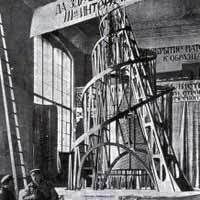
monument to the third international
Vladimir Yevgrafovich Tatlin - Monument to the Third International - monument to technology and improvement

A person who holds a technological determinist view – that technology is the biggest cause of social change – would tend to see change as caused by technology, and not to see technology itself as being changed by society. They may embrace new technology as the way forward, as the way that society is changing and progressing. Technological determinists may not see the choice to accept technology or not, and may not see their role in shaping the way technology develops in the future. A technological determinist would therefore tend towards enthusiastic but passive acceptance of the progress of technology, or depressed rejection of the march of technology in a way that we have no power to stop or change.

A technological determinist attitude would be unhelpful to multimedia design practice because they would see new technologies as progress that needs to be embraced. Technological determinism would be unhelpful because in multimedia design practice you need to think of creative ways to use technology and imagine ways that you would like it to develop in the future, and to push the boundaries of what is possible and what you would like to be possible rather than accepting that technology is just an impersonal force acting removed from people. It would also be unhelpful to just embrace all new technology rather than exploring the rich possibilities of all technologies available to us, old and new.