Pippa Norris – Civic Society – Digital divide
Aspects of developing a civic society through the diffusion of communication technology (the internet). Do technologies provide a democratisation process for society? Are information and communication technologies such as the internet an equaliser in power?
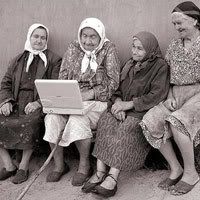
the digital divide?
Retrieved from http://techrepublic.com.com/i/tr/cms/contentPics/FUTURE.JPG
Some argue that the internet helps equalise power by providing wider access to information, communication and participation in the public sphere. Protest movements have the ability to put out information in a way never possible before. Others argue that the internet can often be a source of unreliable and unverifiable information. Some fear that the internet may even strengthen those already in power rather than being a great equaliser, for example as being just another commercial arena that is commoditised.
Information technologies can tend towards equalising power, but at the same time the powerful are able to gain more control, and undo any equalising power. Also the internet, although becoming easily accessible in developed countries is still undemocratic in terms of world equalisation of power, when the vast majority of the world’s poorest most powerless people don’t have any access to the internet at all. Also using the internet in a way alternative and resistant to current power structures is usually unequally divided because less educated people are less likely to harness the democratising power of the internet. So the democratising power of the internet is possible in theory, but in practice I don’t think the internet is the great equaliser, but it can be helpful to civic society.
posted by nicole @ 12:18 PM


0 Comments:
Post a Comment
<< Home