Multimedia Design - History and Context

Friday, October 27, 2006

History and theory and multimedia practice

How can history and theory relate to the practice of multimedia design?

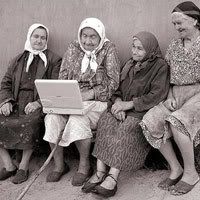
on the shoulders of giants
history and context

retrieved from http://mk23.image.pbase.com/u34/wangi/upload/41304247.P1150832small.jpg

Studying history and theory helps me to realise the context that I am entering as a multimedia designer. It helps me to think about why things have developed the way they have, and to see reasons behind why things are, and the ways they are developing.

Studying the history makes me appreciate some of the big questions that I need to think about. Everything that I make is in a cultural context even if I am not aware of my cultural context. I would like to be more aware of the context that I am designing in, because I want to benefit from the rich history of ideas and practice, and continue on rather than re-inventing the wheel. I would also like to be able to be critical of my context, and to be critical requires awareness first.

Studying theory can also help redefine design problems, and help you question why things are done in a certain way, and if other ways are possible and preferable. It also helps you re-think possibilities and more traditional ideologies.

Friday, October 20, 2006

Pippa Norris – Civic Society – Digital divide

Aspects of developing a civic society through the diffusion of communication technology (the internet). Do technologies provide a democratisation process for society? Are information and communication technologies such as the internet an equaliser in power?

digital divide
the digital divide?
Retrieved from http://techrepublic.com.com/i/tr/cms/contentPics/FUTURE.JPG

Some argue that the internet helps equalise power by providing wider access to information, communication and participation in the public sphere. Protest movements have the ability to put out information in a way never possible before. Others argue that the internet can often be a source of unreliable and unverifiable information. Some fear that the internet may even strengthen those already in power rather than being a great equaliser, for example as being just another commercial arena that is commoditised.

Information technologies can tend towards equalising power, but at the same time the powerful are able to gain more control, and undo any equalising power. Also the internet, although becoming easily accessible in developed countries is still undemocratic in terms of world equalisation of power, when the vast majority of the world’s poorest most powerless people don’t have any access to the internet at all. Also using the internet in a way alternative and resistant to current power structures is usually unequally divided because less educated people are less likely to harness the democratising power of the internet. So the democratising power of the internet is possible in theory, but in practice I don’t think the internet is the great equaliser, but it can be helpful to civic society.

Thursday, October 12, 2006

Fiona Macmillan – copyright and corporate power.

Recent development in copyright legislation has an adverse effect of hindering cultural development. Do you agree? What are implications of copyright and intellectual property legislations for multimedia designers?

Campbell’s soup
Andy Warhol probably wouldn’t be allowed to do this today – retrieved from
http://www.georgetown.edu/faculty/irvinem/visualarts/Image-Library/Warhol/Warhol-200_Campbells_Soup_Cans-1962-NGA-MI-lg.jpg

I agree that recent developments in copyright legislation can hinder cultural development, because there is less and less ability to use cultural artefacts in any way other than to consume in the way intended by the copyright owner. All power over intended use is given to the copyright owner, and fair-use is eroded. There is becoming less and less ability to culturally engage with copyrighted things, for example in parody or criticism, or to use cultural narratives or ideas and extend them in another work. For example in the case of the “string of puppies” a sculpture was judged to be infringing on the copyright of a photograph.

Implications of copyright and intellectual property for multimedia designers are that there are less common images and cultural products like music and films that are able to be referred to or used in a multimedia work. There is less ability to engage with different cultural products that are copyrighted. Multimedia design practice needs to not continue to perpetuate the power of copyright to continue to comodify and stop fair-dealing cultural engagement with cultural products. Private power needs to be more publicly accountable as Fiona Macmillan suggests. Multimedia design could be part of dispersing the growing power of the few over cultural production.

Sunday, October 01, 2006

Robins and Webster - cyberwars - the military information revolution

Most technologies are not neutral in their design. Especially technologies developed for warfare remain tainted with their original intention of destruction. Contrary to this view, many retort with the phrase, “guns don’t kill people, people kill people,” Whose view do you agree with and why?

bullets kill people
it isn’t the gun that kills people, it’s the bullet – retrieved from
http://www.lickthelight.com/quick/img_sept11/1__se_guns_c_juaxss.jpg

I agree with Robins and Webster that technology is not neutral in its design. A designed object has been made for a purpose. Technology cannot be neutral because in being made for a purpose, by people, it is a tool made to be used in a certain way. Guns and warfare technologies are especially not neutral because they are made specifically to be able to kill and destroy, to be an extension of people’s abilities. Guns are not just a neutral object that can in some bad circumstances be used to kill – they are designed to kill.

Although it can be argued that some technologies are more neutral than others, that some technologies like medicine technologies, are designed to save people. In this case I would argue that they are still not neutral, that they are infact designed to be good.

Technologies are always designed for a purpose and not all the purposes of design will ever be neutral or good. In the example of medical technologies, often the design of treatments for diseases, although good in purpose, can often be driven by aims of profit (over pure wellbeing of people.) Also even if there were some technologies that are neutral, even they could have unintended negative side-effects, and the decision to still use them, despite negative side effects, would make even a ‘neutral’ technology less ‘neutral.’

I think that guns, (which are designed and used by people,) are designed and used to kill people. And although people kill people with whatever tools they have, guns are a non-neutral technology that are designed to be efficient powerful killing machines.